Technology· 68 views
March 2026 Proves Tech Has Entered Its Infrastructure Era
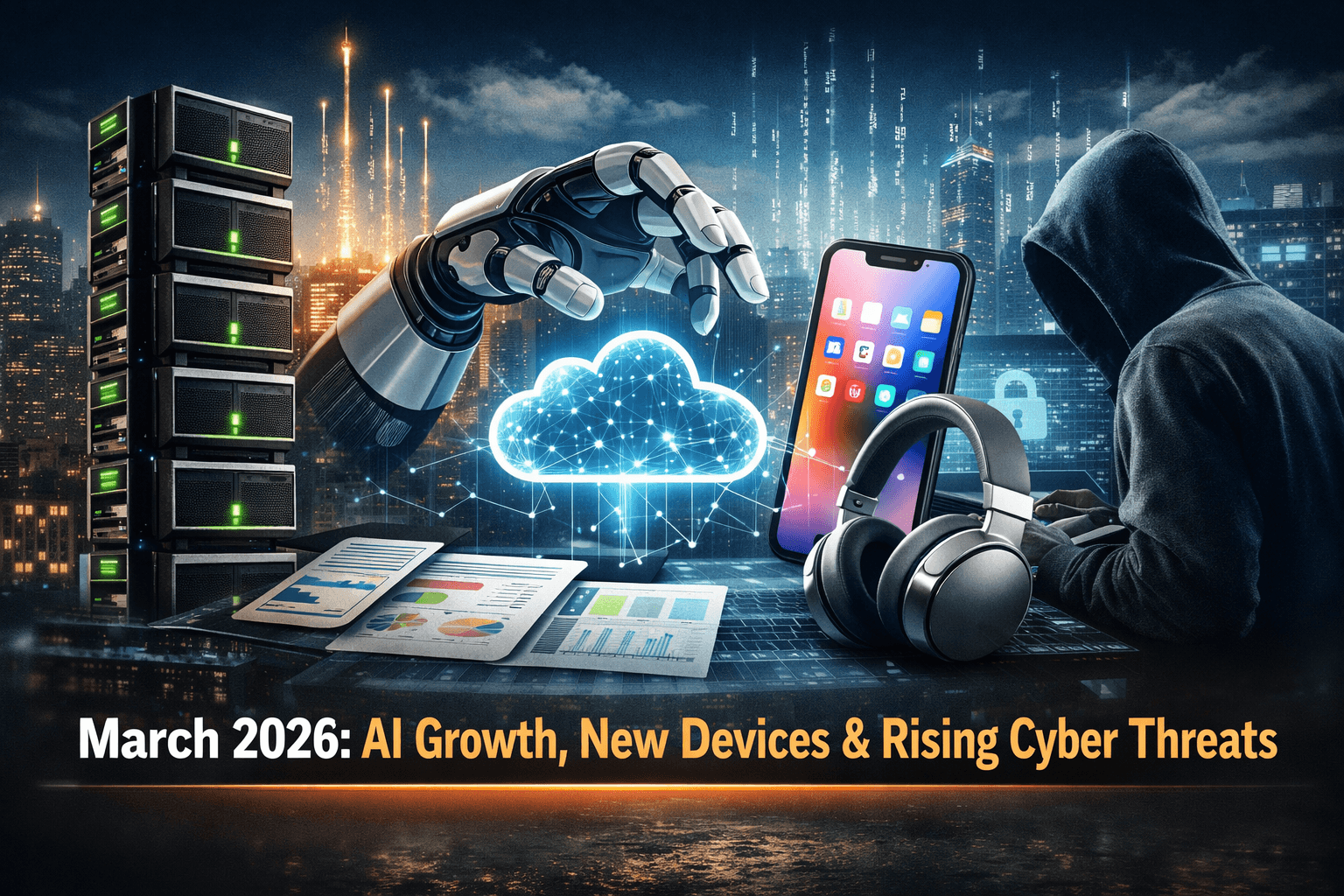
March 2026 marked a shift in tech from flashy AI demos to real-world deployment. The month’s biggest developments showed that the future of technology now depends on strong infrastructure, massive computing power, smarter workplace tools, more useful consumer devices, and stronger cybersecurity.
For the last few years, the tech industry has been obsessed with what artificial intelligence can do. In March 2026, the conversation shifted toward something more serious: what it takes to make AI real at scale.
This month did not feel like another round of flashy demos. It felt like a turning point. The biggest stories in tech were not just about smarter chatbots or cooler features. They were about chips, cloud capacity, workplace integration, device ecosystems, and security. In other words, March showed that modern tech is no longer defined only by innovation, but by infrastructure.
Nothing captured that shift more clearly than Nvidia’s latest moves. Reuters reported that Amazon Web Services agreed to buy 1 million Nvidia GPUs by the end of 2027, a deal tied to the wider build-out of AI computing capacity. At the same time, Nvidia framed the commercial opportunity for its Rubin and Blackwell chip families as a $1 trillion market through 2027. That kind of language matters. It suggests that AI is no longer being treated as an experimental side project. It is being positioned as the next foundational layer of digital business, much like cloud computing was in the last decade.
The ripple effects are already visible in the software people use every day. Google spent March expanding Gemini deeper into Workspace, adding new ways to create and edit documents, build spreadsheets, design presentations, and work across files in Drive. In Sheets specifically, Google said new beta features can help users create, organize, and edit entire spreadsheets from natural-language prompts, including more advanced data-analysis workflows. These are not niche experiments for power users. They are signals that productivity software is being rebuilt around AI assistance as a native expectation, not an optional add-on.
Microsoft pushed the same idea even further. In its Wave 3 announcement for Microsoft 365 Copilot, the company described a move from simple AI assistance toward more embedded, agentic workflows inside Word, Excel, PowerPoint, Outlook, and Copilot Chat. Microsoft also announced broader model support, including Claude and next-generation OpenAI models, alongside the upcoming general availability of Agent 365 and the Microsoft 365 E7 Frontier Suite on May 1, 2026. The message is clear: the next phase of workplace AI is not just about generating text faster. It is about delegating multi-step work, managing agents, and bringing governance into the same system.
Consumer technology reflected the same trend, just in a more polished form. Google’s March Pixel Drop introduced more AI-driven personalization, including expanded Circle to Search shopping features, Gemini actions across apps, Magic Cue restaurant suggestions, and new Pixel Watch safety tools. Apple, meanwhile, announced AirPods Max 2, powered by the H2 chip, with ordering set to begin on March 25 and availability starting in early April. These product launches show how AI is moving beyond the “wow” factor and becoming part of the everyday device experience: quieter, more embedded, and more useful when it fades into the background.
But March also reminded us that the more connected technology becomes, the more fragile the system can feel when security breaks down. Reuters reported that Russian-backed hackers were targeting Signal and WhatsApp users by tricking them into sharing verification codes and PINs, giving attackers access to private and group chats. Around the same time, medical device company Stryker said it had contained a cyberattack that began on March 11, after the incident disrupted order processing, manufacturing, and shipments. The U.S. government then urged companies to strengthen the security of Microsoft’s endpoint management tooling in response. These were not abstract warnings. They were a direct reminder that digital transformation without operational resilience creates new points of failure.
Taken together, the biggest tech stories of March 2026 point in the same direction. The industry is growing up. AI is no longer just a product feature or a marketing headline. It is becoming part of the plumbing of business, work, communication, and devices. That makes this moment more exciting, but also more demanding. Companies now have to think about compute, deployment, security, governance, and reliability all at once.
That is why March mattered. It was not the month tech got louder. It was the month tech got more serious.